



Our Community Issues
I will continue to fight for you and our future financial prosperity.
This year I successfully brought a constitutional amendment to the House floor for a vote that would constitutionalize the PFD by simply requiring the state to pay the PFD according to the formula established by law. While the legislation didn't pass – it failed along party lines – it is the first time that the legislature has had the opportunity to vote on the matter.
The annual fight over the Permanent Fund Dividend is a deeply political issue. Many in the legislature, and the powerful lobbies influencing the legislature believe that permanent fund earnings are better spent on government programs. This year, the fight centered around education where many left-of-center legislators attempted to dedicate a portion of the PFD towards a permanent education spending increase. My opponent was in line with the education establishment supporting this wrong-headed policy.
I will continue to pursue a constitutional amendment to ensure that a PFD is paid from the earnings of the people’s Permanent Fund.
I care deeply about our children’s education.
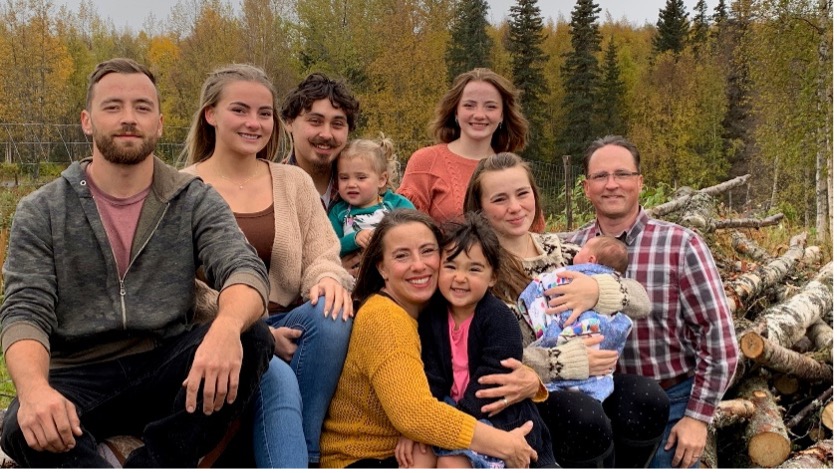
As a graduate of the KPBSD, and a post-secondary university, I am dissatisfied with the state of our education system. As a parent and grandparent of school-age children, I have a dog in this fight!
If we want to improve our local schools, then we need parents to take responsibility for the inputs that make our schools function. I will tell you how we can do this and then I will tell you why doing so is so important.
One way to achieve parental responsibility in our schools is to create more charter schools.
Alaska charter schools are among some of the best in the nation, according to a recent Harvard study. Charter schools could be new schools or in lieu of current schools, costing very little to implement.
The reason the charter school model works is because parents are elected to an Academic Policy Committee and are responsible for establishing school policies, approving budgets, selecting curriculum, and hiring the principal. It’s the parent’s policies and decisions that support the school’s teachers and students, and parents are responsible for the results.
Another way to achieve parental responsibility is to simply create Academic Policy Committees in each of our current brick-and-mortar schools.
The strengths of the charter school will improve our traditional schools too. It’s the most local control a community can have over their schools!
I authored legislation this year to accomplish either of these objectives. I did so with an understanding with the education establishment that I would support an education funding increase if policy reforms were included. Education special interests opposed all meaningful education reform initiatives. The special interests only wanted funding increases.
Why is parental responsibility so important?
Our education system has become disconnected from parents and is slowly spiraling into mediocrity. There are pockets of brilliance where good leadership exists, but where public employee unions and other special interest groups have an outsized influence over administrators and teachers, parents are fleeing the scene. Consequently, where student enrollment is down, funding problems are magnified.
We can improve public education, but we must face reality and make some hard decisions.
It is a fact that special interests have replaced parents as the biggest advocates of our public education system at both local and state levels.
What this means is that parents aren’t the primary decision makers in our schools.
At best, parents enjoy an advisory opinion, and at worst, are ignored. School district mandated Site Councils are an example. Membership is advisory only. Parental advice is subject to the school principal’s leadership abilities, making results inconsistent across the school district.
I consistently hear from teachers that their jobs are made harder by social problems spilling over into the classrooms. Smaller classroom sizes would be convenient for teachers but won’t solve this problem! Parents currently have no responsibility for school policies that would address societal issues.
I hear from teachers who are frustrated with the revolving curriculum choices made by school district administrators. These teachers are conditioned by “leadership” not to speak out for fear of retribution. Parents currently have no responsibility for curriculum choices.
It’s really no wonder that we have a shortage of teachers.
Who would want to work in an environment where teachers truly aren’t supported by parents nor administrators?
One might argue that the school board represents parents, but our current school board is made up of a majority of former union members or married to current union members. These special interest advocates are not advocating on behalf of parents as much as they are the education establishment. They are certainly disconnected from the parents who have pulled their children from the KPBSD. Will this school board repair relationships and win the support of parents who’ve given up on the KPBSD?
These relationship realities need to be corrected if the downward spiral is to be reversed.
Poor leadership and unwanted school policies, including curriculum choices have caused a decline in student enrollment in KPBSD schools as parents seek better alternatives for their children. Parents are enrolling their children in alternatives that are more responsive to parent's needs.
What's unfortunate is that not all parents have options. Many working parents are stuck with mediocre schools as the only option for their children. Some parents can’t homeschool their children and are excluded from charter schools by a lottery and waiting lists. The best of our schools are unavailable to those with the fewest options!
Improving public education is about more than money.
In a coordinated manner, some (special interests, administrators, teachers, Assembly and School Board members) claim that declining education performance and enrollment is because of a lack of state funding. Some feel that the KPBSD budget deficit is because the state doesn’t fund education adequately enough. They ignore reality: parents have education options, and our school district is failing to compete.
State-wide, student enrollment has remained relatively flat as KPBSD student enrollment has declined.
Described more accurately, parents have shifted their priorities to other schooling options. It's true that school district costs have increased, but declining enrollment means the district qualifies for less state funding. The KPBSD budget is impacted by inflation and increased costs but also by competition and lack of responsiveness to parents. The downward spiral will not be reversed with money alone.
Empowering parents at the local level will help improve our system of education.
We need the right members in the legislature who will choose parents over special interests. I am committed to that end.
I Opposed Rank Choice Voting in 2020 Because it was Bad for Alaskans. I Support the Repeal RCV Ballot Initiative in November:
- RCV complicates elections. Elections should be simple.
- RCV does not allow results to be determined by humans.
- RCV demands a longer time to determine official results.
- RCV alienates voters.
Northern Kenai Peninsula Residents Oppose Rank Choice Voting:
- 61% voted against Ballot Measure 2 in 2020.
Notable Alaskans Promoting Rank Choice Voting in 2020:
- Lisa Murkowski, Cathy Giessel, Jesse Bjorkman
Economic growth happens when people are employed, taxes are kept low, and government regulations are minimized.
Incentives matter. Our progressive corporate income tax is one of the highest in the nation. When entrepreneurs evaluate locations to start new business, Alaska's tax policy is an impediment to new business growth. Alaska needs to be a business-tax-friendly state if we are to incentivize economic activity!
I authored legislation that would reduce our maximum 9.4% progressive corporate income tax to a flat 2% tax for all taxpayers. Reducing our CIT will incentivize economic activity and job creation.
Alaska is a net-positive recipient of federal tax dollars. In other words, Alaska receives more federal dollars to our state budget than Alaskan residents pay in federal taxes. Relying upon federal spending as part of our state revenue does not make for a reliable foundation for economic growth. Many of the federal dollars received are in the form of matching funds for capital projects.
I will work to prioritize capital spending that brings value to the economy and has a return on investment that covers future maintenance and capital improvement costs. I will minimize capital spending that grows state budget maintenance requirements without a way to pay for those maintenance needs. For example, a road built that leads to, and is funded by, increased economic activity (i.e., resource development or tourism) is beneficial. Capital projects for a university system that already cannot pay for itself, will not provide a return on investment, and that will only increase the future cost to the state are unwise.
Improving food security improves our economy. Families growing more food means Kenai Peninsula residents keep more money in their pockets. Lowering property taxes on gardens, greenhouses, farms, and agriculture related structures incentivizes their creation and helps keep money in Alaska.
Alaskans need to prioritize energy security in Alaska by investing in reliable and cost-effective energy projects.
If it's not reliable, nor cost-effective, Alaskans don't need it. In other parts of the country, when electricity goes out, the lights go out. When electricity goes out in Alaska, people freeze to death.
I support development of natural gas and clean-burning coal energy production as the most cost-effective and reliable non-renewable energy sources. I support the creation of hydroelectric and geo-thermal energy production as the most reliable renewable energy sources.
I do not support massive government subsidized wind and solar projects in Alaska that are neither reliable nor not cost-effective without government subsidies.


Ben wants to hear from you!